Application
Drilling Rentals
Rotary & directional drilling strings
From spud to total depth, Drillstrings supplies the complete rental drill string — drill pipe, heavy-weight drill pipe, drill collars and the BHA tools that go with them — for vertical, directional and horizontal drilling in any basin, inspected and ready to run.
Rental tools for the whole drilling string
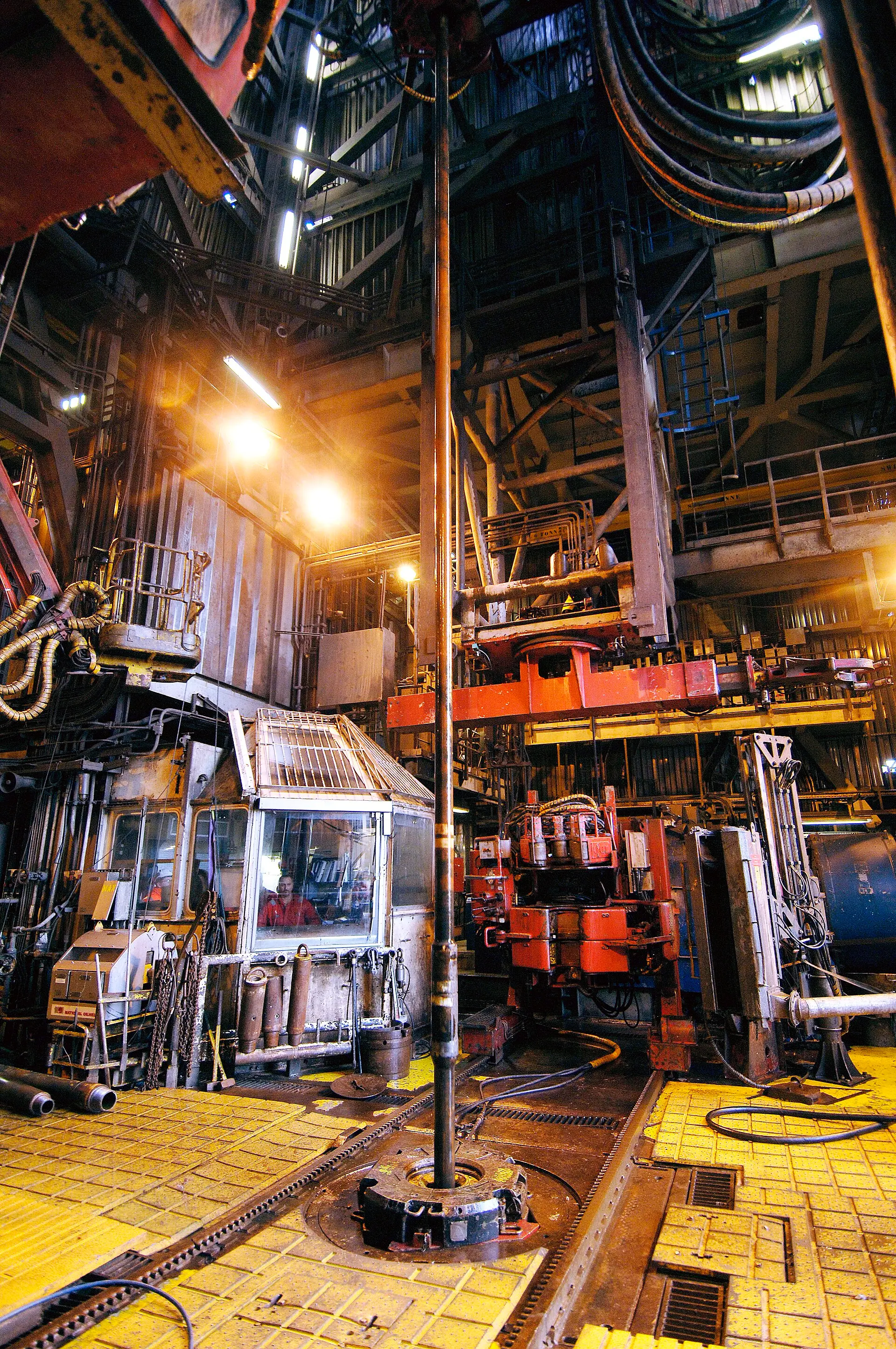
Drilling is where the drill string does its core job: transmitting rotary torque and drilling-fluid hydraulics from surface to the bit while carrying its own weight in tension. Getting that string right — the correct grades, connections, weights and BHA tools — is the difference between steady progress and non-productive time. Drillstrings rents every component, inspected and serialized, so you can build the string your well program calls for without tying up capital.
Building the string, from the bit up
- Drill collars provide weight-on-bit and keep the lower assembly in compression. Non-magnetic collars isolate MWD/survey tools in directional work.
- Heavy-weight drill pipe adds weight and smooths the stiffness transition between the rigid collars and the more flexible drill pipe, reducing fatigue.
- Drill pipe in the right size and grade — commonly 5” or 5½” S-135 for long horizontals, lighter grades for shallow vertical wells — makes up the bulk of the string.
- Downhole tools — stabilizers, drilling jars, shock subs and crossover subs — protect the string and control the hole.
Vertical, directional and horizontal
Vertical wells run a straightforward rotary BHA. Directional and horizontal wells — now the majority of unconventional drilling — add steering (a mud motor or rotary steerable system), MWD/LWD telemetry and careful stabilization to hit the build rate and hold the lateral. These strings see high torque and cyclic fatigue, which is why grade selection, premium connections and inspection class matter so much. See our guide to directional and horizontal BHA essentials and drill string design fundamentals.
Grade and connection selection
Grade sets how much tension and torque a given pipe size can carry. The four API grades — E-75, X-95, G-105 and S-135 — correspond to minimum yield strengths of 75, 95, 105 and 135 ksi. Shallow vertical wells often run E-75 or X-95; deeper and directional wells lean on G-105; and deep, high-torque, extended-reach and horizontal wells run S-135, which is the workhorse grade for modern laterals. Grade is independent of nominal weight, so a heavier wall in the same grade is another way to add capacity. Connection choice follows the same logic: standard API rotary-shouldered joints (NC38, NC46, NC50, FH) suit most drilling, while premium double-shoulder connections carry higher make-up torque with fatigue margin for long, high-torque laterals. Our drill pipe grades explained guide walks through the trade-offs.
The neutral point and weight-on-bit
A drilling string is designed so the transition from compression to tension — the neutral point — sits within the drill collars, never in the drill pipe. Drill pipe is a tension member; running it in compression invites buckling and fatigue failure. Sizing the collars (and HWDP) to supply the required weight-on-bit while keeping the neutral point in the heavy tools is the core of drill string design. We help you size the BHA so the string carries WOB with the neutral point where it belongs.
Standards and inspection
Every tube and tool is inspected before it ships. DS-1 and API RP 7G-2 define the inspection classes: Premium class requires at least 80% remaining wall on the pipe body, and Class 2 at least 70%. Connections are inspected for thread and shoulder condition, and tool joints are gauged and re-faced as needed. Specify your inspection class up front — a high-torque S-135 lateral warrants Premium-class pipe, while a shallow vertical hole may run economically on Class 2.
A short worked example
For a 12,000 ft vertical well with a 9,000 ft lateral, a common string is 5” 19.50 lb/ft S-135 drill pipe to surface, a few thousand feet of heavy-weight drill pipe above the BHA to keep the neutral point in the heavy tools, and 6¾” drill collars plus stabilizers, a drilling jar and non-magnetic collars around the MWD tool near the bit. We assemble and inspect that whole string to your program.
Inspected, certified, delivered
Every drilling tool we rent is inspected to DS-1 / API RP 7G-2 categories, serialized for traceability and available in sour-service (NACE MR0175) material where the well demands it. Whether it makes more sense to rent for a single well or buy for a long campaign, we handle both — see our rent vs buy guide. Tell us your well parameters and we’ll quote a complete drilling string within the hour.
Build the whole string with us
Every element in the schematic is available on rental, inspected and matched to your program.
Equipment
Tools for drilling
Drill Pipe
API 5DP tubulars, 2⅜" to 6⅝"
View detailsHeavy-Weight Drill Pipe
HWDP for transition & directional work
View detailsDrill Collars
Slick & spiral collars for weight-on-bit
View detailsDownhole Tools
Jars, stabilizers, shock subs, subs
View detailsBHA Components
Subs, saver subs, bit subs, reamers
View detailsFAQ