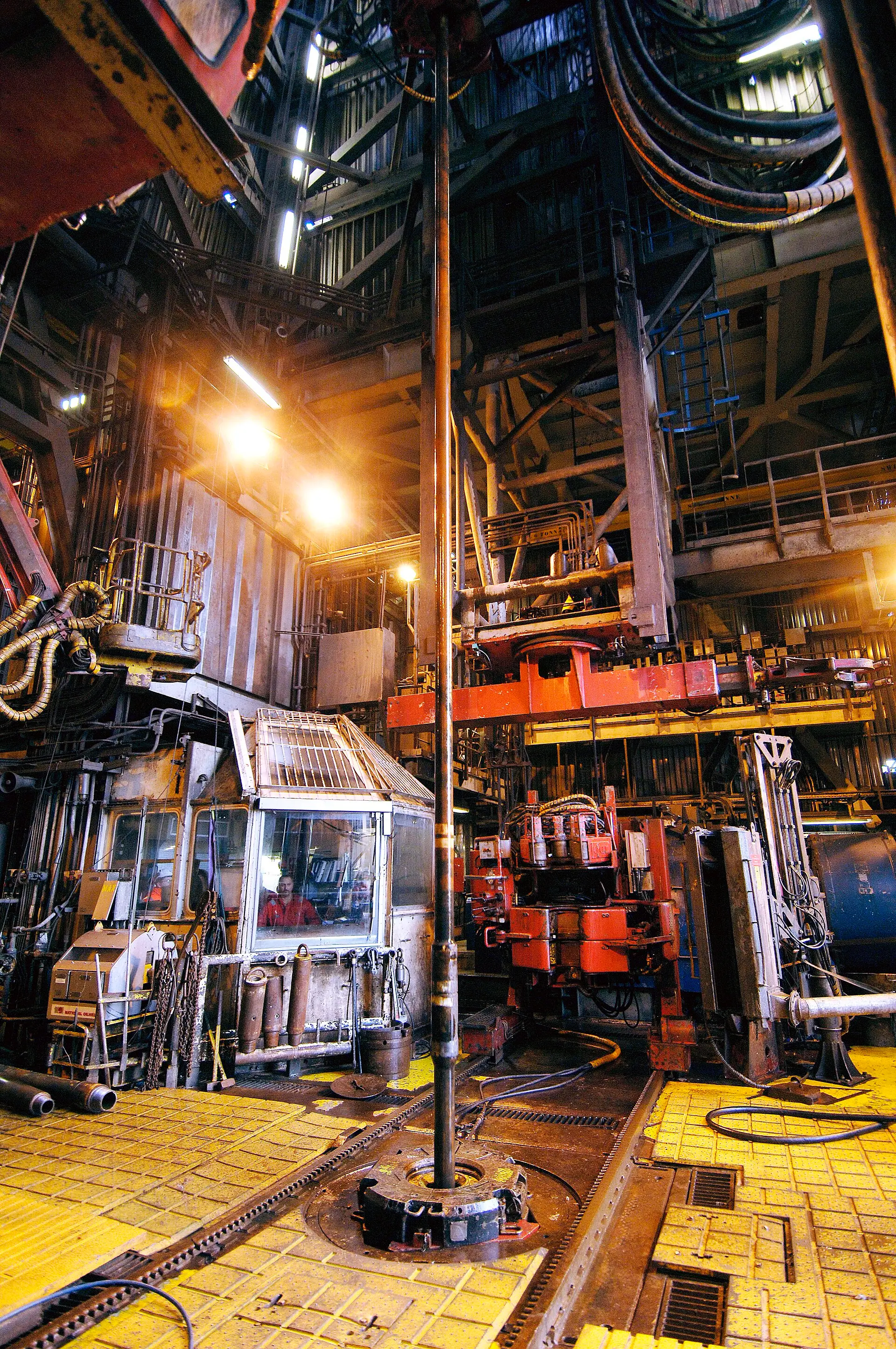
Definition
Elevator — An elevator is a hinged, latching clamp suspended from the hook by bails that grips a tubular under its tool joint or coupling to raise and lower drill pipe, casing or tubing during tripping.
Also known as: drill pipe elevator, casing elevator, bail-mounted elevator
What an elevator does
An elevator is a load-bearing handling tool that hangs from the traveling block via a pair of bails (elevator links) and latches around a joint of pipe so the derrick can lift and lower it. Slip-type elevators grip on the pipe body through tapered slips, while shoulder-type (side-door or center-latch) elevators carry the load on the tool joint or coupling shoulder.
Elevators are rated by load capacity — commonly 100 to 500 tons or more — and must be matched to the tubular size and the weight of the string being run. They work in concert with the slips, which suspend the string in the rotary table while the elevator releases and re-latches on the next joint.
Types and selection
- Center-latch and side-door elevators — grip under the tool joint shoulder; common for drill pipe.
- Slip-type (bottleneck) elevators — grip the pipe body; used for casing and tubing without upsets.
- Single-joint elevators — lighter tools for stabbing individual joints.
Correct elevator selection depends on the outside diameter, the connection or coupling profile and the load rating required for the deepest, heaviest string interval.
Why it matters for rentals
Elevators are safety-critical: an under-rated or worn elevator can drop a string. Rental elevators should carry current load-rating certification and be inspected for latch wear, hinge integrity and crack indications. Explore our handling tools or send us your string weight and pipe size and we’ll match the correct capacity.