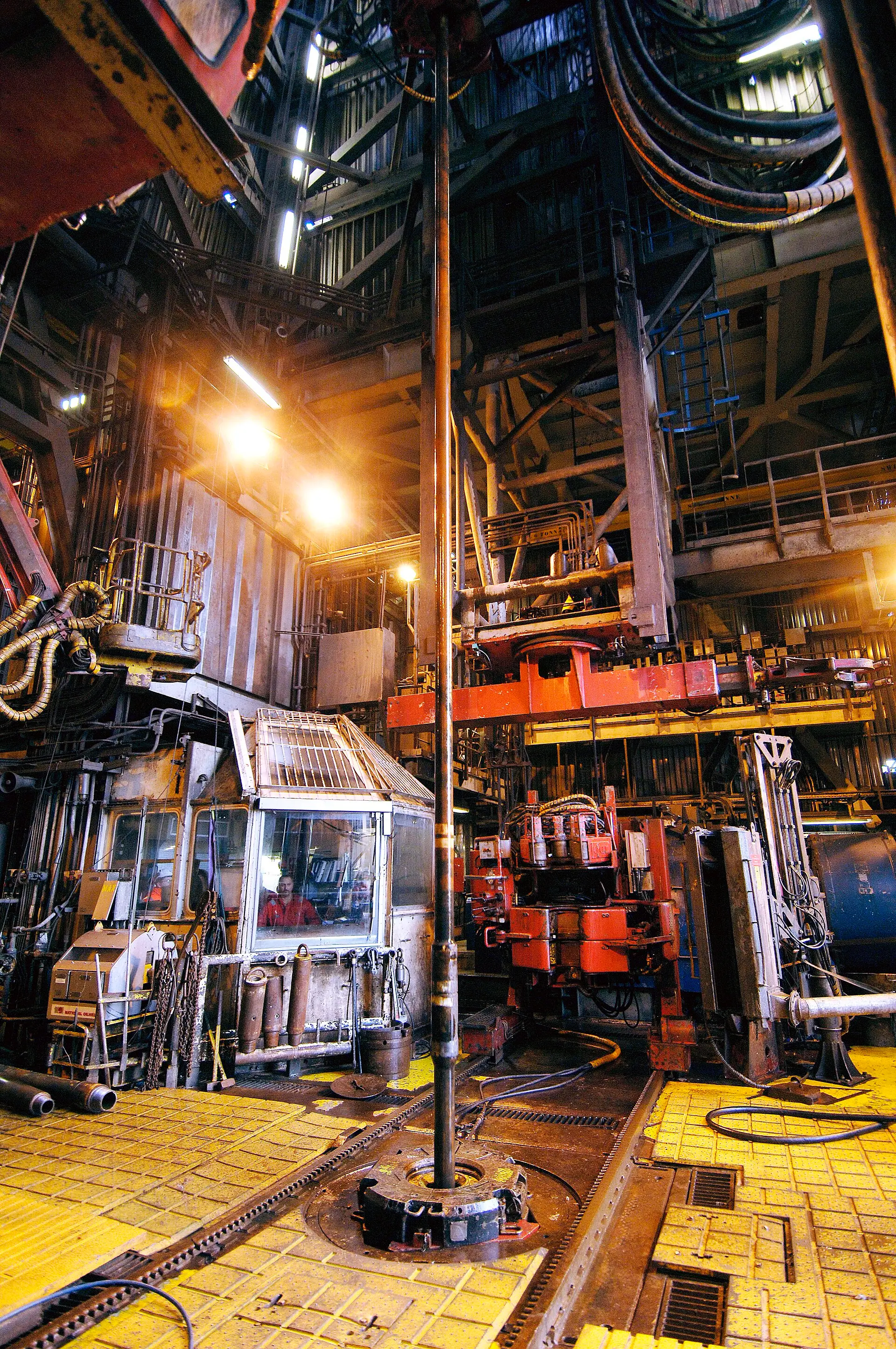
Definition
Blowout Preventer — A blowout preventer is a large valve or stack of valves installed at the wellhead that can seal the annulus or the entire bore to shut in the well and contain formation pressure during a kick, forming the primary surface barrier for well control.
Also known as: BOP, BOP stack, ram BOP, annular preventer
What a blowout preventer does
A blowout preventer (BOP) is the surface (or subsea) equipment used to close in a well when formation fluids enter the wellbore. A BOP stack typically combines an annular preventer, which seals around any pipe shape or an open hole, with several ram preventers: pipe rams that seal around a specific pipe size, blind rams that close an empty hole, and shear rams that cut the pipe and seal. Closing the appropriate element isolates the well so a kick can be circulated out under control.
BOPs are hydraulically actuated from a control unit (accumulator/koomey) and are backed up by choke and kill lines that route flow to the choke manifold during well-control operations.
Role in well control
The BOP stack is the primary mechanical barrier at surface. When a kick is detected, the crew shuts in on the BOP, reads the shut-in pressures, and circulates the influx out using a controlled method such as Driller’s or Wait-and-Weight. Regular function and pressure testing is mandated to ensure the stack will hold when needed.
Why it matters for rentals
While the BOP stack itself is rig equipment, the drill-string barriers that work with it — inside BOPs, full-opening safety valves and dart valves — are commonly rented and must match the pressure envelope. See our pressure control equipment and well control application, or contact us.